
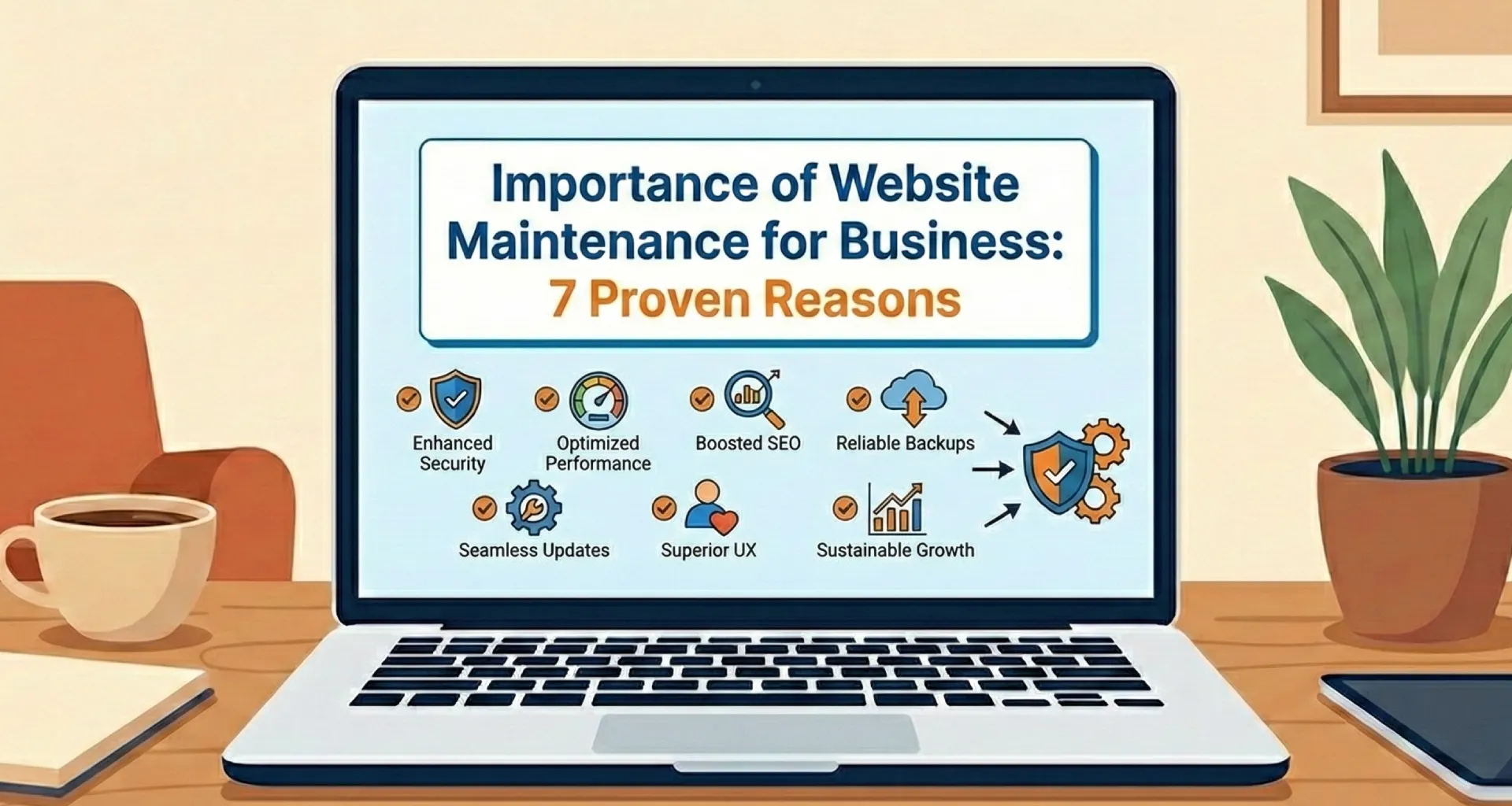
In today’s fast-paced digital world, your website is your 24/7 salesperson. But imagine if that salesperson showed up to work in tattered clothes, forgot their pitch, or—worse—locked the front door so customers couldn’t get in.
That is exactly what happens when you neglect website maintenance.
Maintaining a website is more than just a “nice-to-have” task; it is a fundamental requirement for staying competitive. Whether you are a small local shop or a global enterprise, keeping your site updated is essential for security, speed, and growth.
Let’s dive into the seven key reasons why regular website maintenance is the heartbeat of your digital presence.
1. Security: Shielding Your Site from Sophisticated Threats
Cyber threats are evolving every single day. Hackers aren’t just targeting big corporations; they use automated bots to find vulnerabilities in small business sites with outdated software.
- The Risk: Outdated plugins, themes, and core files are like leaving your front door unlocked.
- The Fix: Routine maintenance involves installing the latest security patches, updating SSL certificates, and monitoring malware scanners.
Protecting your data isn’t just about safety—it’s about protecting the trust your customers place in you.
2. Enhanced User Experience (UX): Keep Your Visitors Coming Back
First impressions are everything. If a visitor lands on your site and encounters slow loading times or broken navigation, they won’t just leave—they’ll head straight to your competitor.
According to Google’s research on Core Web Vitals, even a one-second delay in load time can significantly impact conversion rates. Regular maintenance ensures your site stays fast, mobile-responsive, and intuitive.
3. SEO Performance: Climbing the Search Engine Rankings
Search Engine Optimization (SEO) is not a one-time setup. Search engines like Google prioritize websites that are:
- Technically sound (no crawl errors).
- Fast-loading.
- Frequently updated with fresh content.
Without regular check-ups, your SEO performance will naturally decline as your competitors update their sites and search algorithms change.
4. Seamless Functionality: Ensuring Every Button Works
There is nothing more frustrating than a “Contact Us” form that doesn’t send or a “Buy Now” button that leads to a 404 error.
Regular maintenance involves testing:
- Contact forms and lead magnets.
- Checkout processes.
- Internal and external links.
- Interactive elements like sliders or pop-ups.
5. Content Updates: Staying Relevant in Your Industry
Content is the lifeblood of your digital marketing. If your latest blog post is from 2021, visitors might assume your business is no longer active.
Updating your site with fresh images, new service descriptions, and quality blog content signals to both users and search engines that your business is healthy, active, and an authority in your niche.
6. Backup and Recovery: Your Safety Net Against the Unexpected
What would happen if your website disappeared tomorrow? Whether it’s a server crash, a botched update, or a hack, losing your data can be devastating.
A professional maintenance plan includes automated daily or weekly backups. Having a clean version of your site stored in the cloud ensures that if the worst happens, you can be back online in minutes rather than weeks.
7. Brand Image: Reflecting Professionalism and Trust
Your website is the face of your brand. A broken, slow, or outdated site suggests a business that is disorganized or out of touch.
On the flip side, a polished, high-performing website built with custom WordPress development reinforces your credibility. It tells your customers, “We pay attention to details, so you can trust us with your business.”
Frequently Asked Questions
How often should I perform website maintenance?
Ideally, you should check for software and plugin updates weekly. A full security and performance audit should be conducted at least once a month.
Can I do website maintenance myself?
If you have technical knowledge, yes. However, many business owners prefer to hire a professional developer to ensure nothing breaks during updates and to save time.
Does website maintenance affect my Google ranking?
Yes! Google rewards sites that are technically healthy. Maintenance prevents broken links and slow speeds, both of which are major “red flags” for search engines.
Conclusion
Website maintenance is an investment, not an expense. By prioritizing the health of your site, you are ensuring a better experience for your users, higher rankings on search engines, and a more secure future for your business.
Ready to stop worrying about your website and start growing your business? I specialize in keeping WordPress sites fast, secure, and up-to-date. If you’re looking for a partner to handle your technical maintenance, I’d love to help.
